

Pacemaker implantation
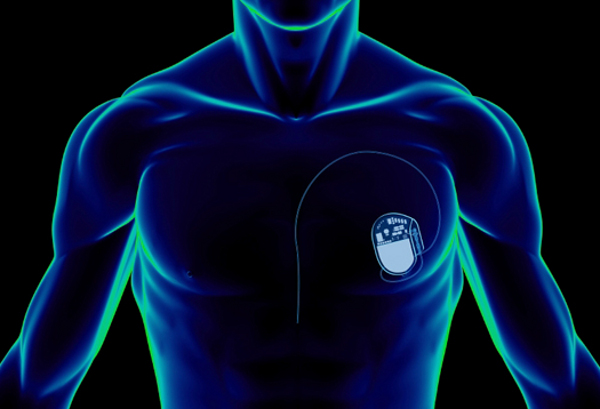 Pacemaker implantation in clinics in Israel and Germany
Implantation of a pacemaker (pacemaker driver) allows you to adjust the rhythm of the heart, significantly improve the quality of life, and in some cases avoid the development of severe, sometimes fatal conditions - sudden death and severe arrhythmias.
A pacemaker is an electronic programmable device capable of capturing and evaluating the heart's own electrical potentials and, if necessary, generating electrical impulses that stimulate heart contractions.
The pacemaker consists of electrodes and a central unit (pulse generator). The electrodes are metal spirally wound flexible structures. The central unit includes a microelectronic circuit and a battery. The pacemaker unit is enclosed in a sealed case made of medical steel or titanium. The average weight of a pacemaker is about 40 g.
Pacemaker: indications for implantation
Indications for pacemaker implantation are various types of heart rhythm disorders, which are accompanied by the development of critical bradycardia (slowing of the rhythm), and (or) phenomena of cardiovascular insufficiency. Among the conditions that are indications for pacemaker implantation are such as:
- Atrio-ventricular block of 11-111 sts
- Bradycardia, which is accompanied by neurocirculatory fainting or conditions close to it (darkening of the eyes, weakness, etc.).
- Arrhythmias, in the treatment of which drugs are used that lead to the development of severe bradycardia.
The list of pathologies does not end here. In each specific case, the indications are determined by the doctor based on the data of tests and clinical picture.
Types of pacemakers
Modern pacemakers, unlike the first models, are able to detect the heart's own rhythm and generate an impulse only when necessary. Ultra-modern devices, in particular resynchronizing system, are able to assess the degree of physical activity of a person and select the optimal rhythm for him “as needed”.
Depending on the features of stimulation are distinguished:
- Single-chamber pacemakers
- Dual-chamber pacemakers
- Resynchronizing system.
The terms “one- and two-chamber” denote the localization of electrodes in one chamber of the heart (atria) or two chambers (atria and ventricles). Thus, a single-chamber pacemaker rhythmizes only the atria, while a dual-chamber pacemaker rhythmizes both atria and ventricles. Each type of pacemaker has its own strict indications for implantation. Resynchronizing system, (sometimes called a three-chamber pacemaker), has certain analyzers that can pick up changes in the body, inherent in physical or emotional stress. According to the received data, the frequency of stimulation is changed, which allows to make the pacemaker work as close as possible to the physiological activity of the heart. This modification significantly improves the quality of life of patients with chronic heart disease.
How a pacemaker is implanted
Currently, there are two principal methods of pacemaker implantation:
- Endocardial, in which the electrodes are placed in the heart cavity
- Epimiocardial, in which the electrodes are placed on the outer surface of the myocardium.
It should be noted that epimiocardial technique is performed in case of urgent need for pacemaker implantation in patients in extremely serious condition, against the background of cardiac and somatic pathology, as well as infectious processes (sepsis). Technically, this type of implantation is more complicated, requiring opening of the pericardium (the outer membrane of the heart) and open access directly to the myocardium. This type of surgery is performed under anesthesia.
Endocardial technique is performed by immersing electrodes into the atrium and (or) ventricle of the heart. For this purpose, a large vessel is punctured, usually the subclavian vein, and through it, using a system of conductors, electrodes are brought into the necessary heart department. The central block of the pacemaker is placed in a subcutaneous pocket, which is artificially formed by detachment of soft tissue in the subclavian region (or elsewhere on the chest). The endocardial implantation technique does not require anesthesia and is performed under local anesthesia.
Pacemaker implantation is performed in leading clinics in Israel and Germany. Highly qualified specialists and the latest equipment allow the operation to be performed with minimal risk of complications.
Possible complications of pacemaker implantation surgery:
- Soft tissue infection
- Bleeding
- Thrombosis
- Electrode displacement
- Pneumothorax.
Most patients after pacemaker implantation are discharged from the clinic after 24 hours.
Further follow-up of the patient, including a pacemaker system test, occurs every 3 or 6 months. On average, the battery and electrodes are replaced routinely after four or six years of use.
Pacemaker Facts
- The first pacemaker was installed in 1956.
- The first pacemakers weighed about 250 grams, while modern devices weigh only 40-20 grams.
- The first pacemakers did not detect the rhythm of the heart and worked with one set frequency.
- Each year, about 1 million patients worldwide undergo pacemaker implantation.
