

Transcatheter aortic valve implantation (TAVI) and MitraClip
 When open heart surgery is not the only option
For a long time, a diagnosis of ‘aortic valve stenosis’ or ‘mitral insufficiency’ meant inevitable open heart surgery with sternotomy and connection to a heart-lung machine. For elderly patients, people with severe comorbidities, or those weakened after a heart attack, such an intervention carries significant risk. Transcatheter technologies TAVI and MitraClip have changed cardiac surgery - today, heart valve replacement and repair are possible without incisions in the chest, through punctures in the groin or thigh.
Medical Expert organises transcatheter heart valve treatment at leading cardiology centres in Germany, Austria, Switzerland and Israel. We work with clinics that specialise in minimally invasive cardiac surgery and have extensive experience in performing such procedures.
What are transcatheter heart valve procedures?
The principle of minimally invasive intervention
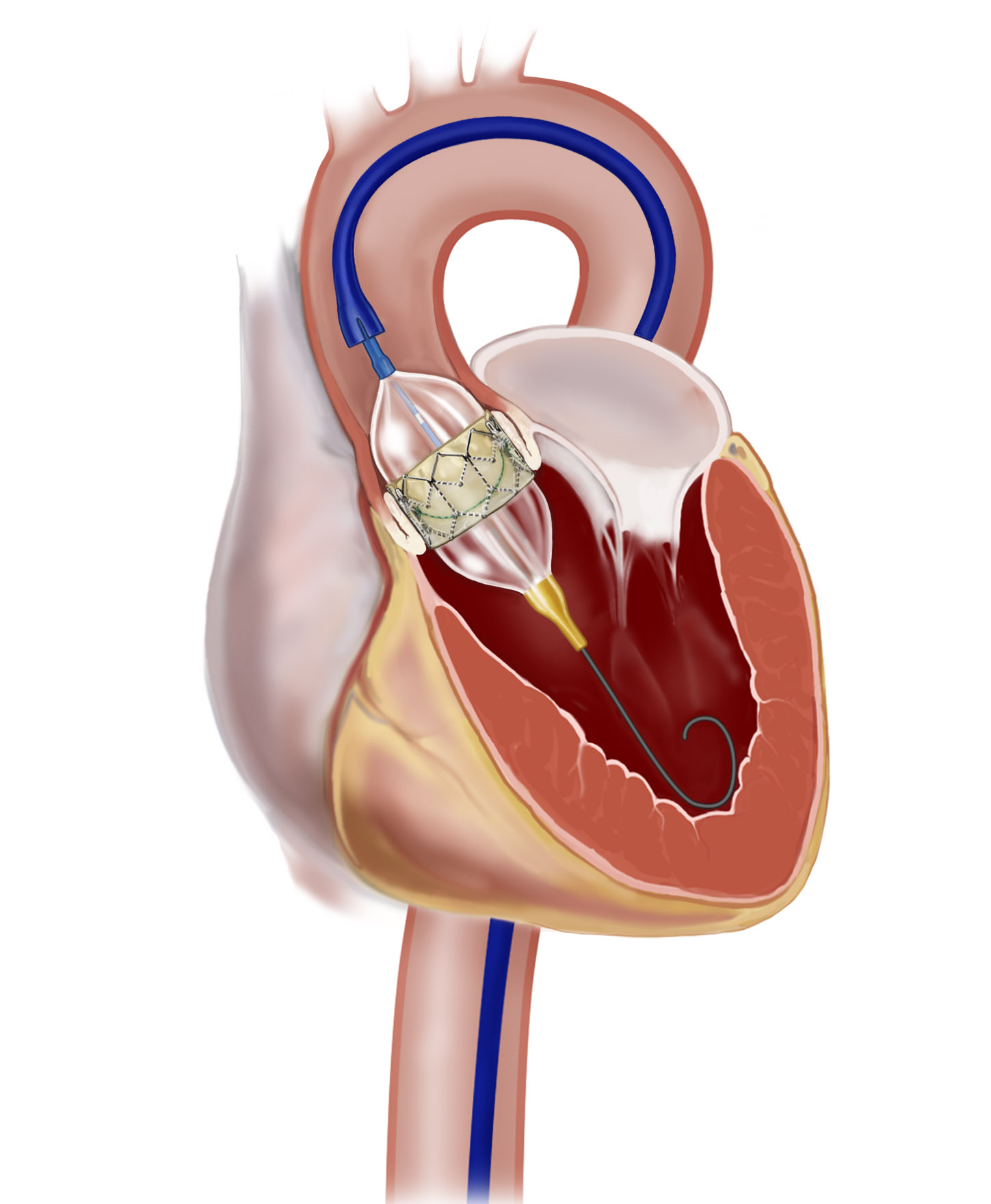
Transcatheter procedures (from the Latin trans, meaning ‘through,’ and catheter, meaning ‘thin tube’) are methods of treating heart valves without open access to the heart. Instead of the traditional sternotomy, the surgeon inserts a thin catheter through a puncture in the femoral artery or vein. Under fluoroscopic and echocardiographic guidance, the catheter is guided through the vessels to the heart, where a new valve is implanted or a damaged one is repaired.
Key advantages:
- No sternotomy (cutting of the sternum)
- No need for artificial circulation
- Local anaesthesia or light sedation instead of general anaesthesia in some cases
- Shorter hospital stay
- Faster recovery compared to open surgery
- Possibility of treating patients with high surgical risk
Who is suitable for transcatheter procedures
TAVI and MitraClip were originally developed for patients for whom traditional surgery is contraindicated or associated with high risk due to:
- Advanced age
- Severe heart failure with low ejection fraction
- Renal failure
- Previous heart surgery (repeat intervention)
- Severe lung disease (COPD, fibrosis)
- Chest fragility (osteoporosis, deformities)
In recent years, the indications have expanded, and transcatheter treatment may be offered to a wider range of patients with the appropriate anatomical conditions and after careful assessment of the risks and benefits.
TAVI - Transcatheter Aortic Valve Implantation
How the TAVI procedure works
TAVI (Transcatheter Aortic Valve Implantation) is used to treat aortic valve stenosis, a narrowing of the valve between the left ventricle and the aorta. In stenosis, the valve calcifies, the leaflets lose their mobility, and the heart has to work harder, which can lead to myocardial hypertrophy and heart failure.
Stages of the procedure:
- Access: Most often through a puncture in the femoral artery (transfemoral access). Alternative options: transapical (through a small incision in the intercostal space, directly to the apex of the heart), transaortic (through a mini-incision in the chest) or other accesses depending on the patient's anatomy.
- Positioning: A special catheter with a biological valve (usually made from animal pericardium) at the tip is advanced through the aorta to the heart. The valve is compressed on a balloon or self-expanding frame.
- Implantation: Under fluoroscopic and echocardiographic guidance, the valve is positioned at the site of the old calcified valve. The balloon is inflated or the frame self-expands, the new valve opens and is fixed in the desired position.
- Verification: Echocardiography confirms the correct position of the valve, assesses its function and evaluates for possible complications.
- Completion: The catheter is removed, and the puncture site is sutured with a special device or manually.
The procedure usually takes from one to several hours, depending on the complexity of the case.
Types of valves for TAVI
European clinics use valves from leading manufacturers:
- Balloon-expandable valves - the valve opens when the balloon is inflated. They allow precise control of the moment and degree of expansion.
- Self-expanding valves - the valve opens independently after being released from the delivery system. They can be partially retracted and repositioned if necessary.
The choice of a specific valve type depends on the anatomy of the aortic ring, the degree of calcification, the presence of anatomical features, and the preferences of the surgical team.
Results and features
Clinical studies show that TAVI may be comparable in effectiveness to open surgery in certain patient groups. Modern valves demonstrate good durability, although long-term follow-up is ongoing.
Possible complications may include:
- Cardiac conduction disturbances with possible need for pacemaker implantation
- Paraprosthetic regurgitation (leakage around the valve)
- Vascular complications at the access site
- Neurological events
- Other complications typical of cardiac interventions
The frequency and severity of complications vary depending on the experience of the centre, patient characteristics, and the technology used.
MitraClip - transcatheter mitral valve repair
How MitraClip works
MitraClip is used to treat mitral regurgitation (insufficiency) - a condition in which the mitral valve between the left atrium and left ventricle does not close completely, allowing blood to flow backwards. This can overload the heart and lead to chamber dilation, arrhythmias and other complications.
How MitraClip works:
The technology is based on the surgical concept of ‘edge-to-edge’: the front and back leaflets of the mitral valve are fastened together with a special clip, creating a double opening instead of one. This can reduce the area of regurgitation.
Stages of the procedure:
- Access: Through a puncture in the femoral vein, a catheter is inserted into the right atrium, then through the interatrial septum (transseptal access) into the left atrium.
- Navigation: Under echocardiographic guidance (usually three-dimensional transoesophageal) and fluoroscopy, the clip at the end of the catheter is positioned over the mitral valve.
- Cusp capture: The clip opens, captures the anterior and posterior cusps at the site of greatest regurgitation, and clips them together.
- Assessment: Echocardiography checks the degree of residual regurgitation. If necessary, an additional clip may be implanted.
- Completion: The catheter is removed and the puncture site is sutured.
The procedure is usually performed under general anaesthesia to ensure accurate echocardiographic control.
Indications and limitations
Indications may include:
- Severe mitral regurgitation with clinical symptoms
- High surgical risk for open surgery
- Degenerative regurgitation (e.g., valve prolapse)
- Functional regurgitation (with ventricular dilatation)
Contraindications:
- Severe rheumatic valve stenosis
- Large valve defects
- Active endocarditis
- Thrombus in the left atrium
- Certain anatomical features that prevent the procedure
Effectiveness and results
MitraClip often reduces, but does not always completely eliminate, regurgitation. The procedure is aimed at improving symptoms and quality of life in patients who cannot undergo open surgery. Clinical studies have shown a potential reduction in hospitalisations for heart failure and improved functional status in a number of patients.
Leading cardiology centres
Medical Expert cooperates with specialised structural cardiology centres in Europe and Israel that have extensive experience in performing transcatheter interventions:
- Germany - multidisciplinary university clinics with hybrid operating rooms combining angiography and open surgery capabilities.
- Austria - cardiology centres with specialist training programmes and participation in international research.
- Switzerland - private and university clinics with modern imaging and navigation equipment.
- Israel - medical centres with experience in treating international patients and a multidisciplinary approach.
Multidisciplinary approach Heart Team
Each case is evaluated by a panel of specialists (Heart Team):
- Interventional cardiologist
- Cardiac surgeon
- Imaging specialist (echocardiography, CT)
- Anaesthesiologist-cardiologist
- Other specialists, if necessary
This approach allows us to determine the most appropriate treatment strategy for each individual patient.
Preoperative examination
A comprehensive assessment usually includes:
- Transthoracic and transoesophageal echocardiography
- CT scan of the heart and blood vessels with three-dimensional reconstruction
- Coronary angiography to assess the condition of the coronary arteries
- Functional tests and assessment of general condition
- Laboratory tests
Based on the data obtained, the possibility and feasibility of transcatheter intervention is determined, and the optimal type and size of the device is selected.
Estimated cost of treatment
The cost of transcatheter valve treatment in Europe varies depending on the country, clinic, complexity of the case and devices used.
TAVI (transcatheter aortic valve implantation):
- Preliminary examination and consultations
- TAVI procedure with valve implantation
- Hospitalisation and post-operative monitoring
- The total cost can range from €30,000 to €50,000+.
MitraClip (mitral valve repair):
- Preliminary examination
- MitraClip procedure (the number of clips is determined intraoperatively)
- Hospitalisation
- The total cost can range from €25,000 to €45,000+
Additional costs:
- Accommodation for the patient and accompanying person
- Medical coordinator services
- Additional rehabilitation (if necessary)
The exact cost is determined after reviewing the medical records and drawing up an individual treatment plan.
Questions and answers
How long does recovery take after transcatheter procedures? Hospitalisation periods are usually shorter than after open surgery. Return to normal activity occurs gradually under the supervision of doctors. Specific timeframes depend on the individual characteristics of the patient and the course of the postoperative period.
Is medication required after the procedure? Yes, antiplatelet therapy is usually prescribed for a certain period. The specific regimen depends on the type of procedure, the device used, and the presence of comorbidities such as atrial fibrillation.
Can I have an MRI after valve implantation? Modern valves are usually compatible with MRI. Specific recommendations depend on the type of device implanted and should be discussed with your doctor.
Are there age restrictions for these procedures? The decision is made on an individual basis based on the patient's overall condition, not just age. More important is the assessment of surgical risk and the potential benefits of the intervention.
Who may not be suitable for transcatheter treatment? There are anatomical and clinical situations where transcatheter procedures are not recommended. The final decision is made by a panel of specialists after a complete examination.
Find out if transcatheter treatment is right for you
Fill out the application for a free consultation - our medical coordinator will contact you within 24 hours, review your documents, and arrange a consultation with a leading European cardiologist.
