

Diagnosis and treatment of lung cancer in Israel
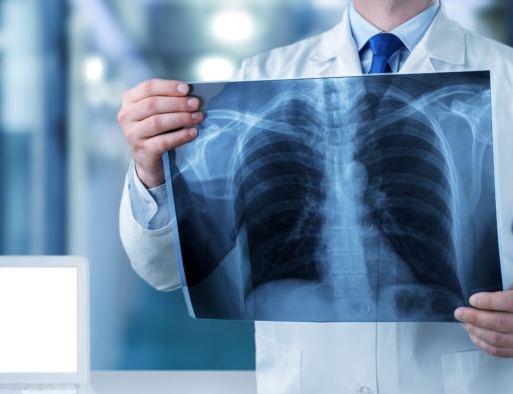 Diagnosis and treatment of lung cancer in Israel – precision that saves lives
Lung cancer remains one of the most difficult oncological diseases, but Israeli medicine shows impressive results: the five-year survival rate in women reaches 38%, in men 27% - this is almost twice as high as the global average (15-20%). With early diagnosis at stage 1, the survival rate is 92%, confirming the critical importance of timely detection and proper treatment.
Medical Expert organizes the diagnosis and treatment of lung cancer in leading Israeli clinics, where the latest treatment protocols are used, which are not available in many countries. Israel is one of the world leaders in clinical trials of orphan (life-saving) drugs, giving patients access to innovative treatments.
Why Israeli lung cancer diagnostics are the global standard
The main feature of the Israeli approach is that no treatment begins without pathomorphological verification of the tumor type and accurate visualization of its spread. This eliminates diagnostic errors and ensures personalized therapy.
Accurate biopsy with minimal risk
Israeli oncologists always choose a biopsy technique that allows them to obtain the maximum amount of histological material with minimal technical risk to the patient.
Biopsy methods:
- CT-guided biopsy - accurate needle guidance into the tumor under visual control
- Bronchoscopy - collection of material through the respiratory tract
- EBUS (endobronchial ultrasound) - a unique technique with ultrasound guidance to reach hard-to-reach areas
- Mediastinoscopy/thoracoscopy - in rare complex cases
Step-by-step pathomorphological analysis
Israeli diagnostics follow a clear protocol:
Stage 1 (72 working hours): Determination of tumor type using immunohistochemistry. This is a basic analysis that shows what type of lung cancer has been diagnosed - small cell or non-small cell, adenocarcinoma, squamous cell, or another variant.
Stage 2 (4 working days): Molecular genetic testing for EGFR, ALK, ROS1, and PDL-1 mutations. This data is critical for selecting targeted therapy and immunotherapy. Without identifying the basic mutations, it is impossible to treat the patient with modern methods - the therapy will be either outdated or ineffective.
Stage 3 (17-24 days if necessary): NGS testing (Next Generation Sequencing) - a high-precision molecular genetic test to detect additional mutations. Foundation One, Guardant 360, Caris MI Profile, Tempus, and TSO500 tests are used. This allows for the selection of individualized targeted therapy with maximum effectiveness.
Visualization of tumors and metastases
Whole-body PET-CT is the gold standard for detecting primary tumors and all possible sites of metastasis. The method combines anatomical imaging (CT) with functional assessment of tissue metabolic activity.
Contrast-enhanced CT scan of the chest organs - detailed visualization of the tumor structure, lymph node involvement, and pleura.
Contrast-enhanced MRI of the brain - mandatory for small cell lung cancer to rule out brain metastasis.
Assessment of the general condition of the body
In the case of a widespread process, it is important to assess the degree of damage to the body:
- Functional lung tests (spirometry, diffusion, blood gases, stress tests)
- Echocardiography to assess the condition of the heart
This allows you to plan safe treatment taking into account the body's reserves.
Innovative lung cancer treatment in Israel
Surgery without metastasis - radical removal
If lung cancer is diagnosed without metastasis, the decision on the type of treatment is made by a team of specialists: an oncologist-pulmonologist, a thoracic surgeon, and an oncologist-radiotherapist. This ensures a multidisciplinary approach and an optimal strategy.
VATS (video-assisted thoracoscopic surgery)
Israeli surgeons prefer minimally invasive techniques that preserve the organ. VATS allows surgery to be performed inside the chest through several small incisions (instead of one large one). The surgeon uses specialized instruments and a miniature video camera to visualize the internal structures on a monitor.
Advantages of VATS:
- Reduced postoperative pain
- Shorter hospital stay of 3-4 days
- Quick recovery and return to active life
- Fewer complications compared to open surgery
- Better cosmetic results
New generation radiation therapy
Israeli clinics are equipped with advanced linear accelerators:
MR-Linac is a unique accelerator with a built-in MRI scanner. It allows you to see the tumor and surrounding tissues in real time, adapting the radiation instantly. This is a revolutionary technology for treating moving lung tumors.
Varian TrueBeam STx is a modern platform for dynamic radiation therapy that synchronizes with the patient's breathing. This is critically important for tumors in the lungs that move with inhalation and exhalation.
High-precision radiotherapy methods:
- IMRT (intensity-modulated radiation therapy) - a computer calculates the optimal dose distribution
- IGRT (image-guided radiation therapy) - control of the tumor position before each session
- SBRT (stereotactic body radiation therapy) - high doses in 3-5 sessions instead of 6-8 weeks of standard radiation
Radiosurgery - high-precision single or fractional delivery of radiation energy to destroy tumors without incisions.
These technologies allow for highly effective therapy with minimal impact on healthy tissue, even in complex cases.
Targeted therapy – personalized treatment
In metastatic lung cancer, the selection of a systemic therapy protocol is carried out by an oncologist-pulmonologist based on the molecular profile of the tumor.
Biological drugs according to indications:
- Tagrisso (Osimertinib) - for positive EGFR mutation in non-smokers
- Alectinib (Alecensa) - for positive ALK mutation
- Other targeted drugs for detected ROS1, BRAF, MET mutations
Targeted therapy acts specifically on the molecular mechanisms of tumor growth without damaging healthy cells.
Immunotherapy - activation of the body's own immune system
Immunotherapy drugs teach the immune system to recognize and destroy cancer cells:
- Keytruda (Pembrolizumab)
- Tecentriq (Atezolizumab)
- Opdivo (Nivolumab)
Immunotherapy is particularly effective at high PDL-1 levels.
Orphan drugs - access to innovation
An important feature of treatment in Israel is the rapid introduction of orphan (vital) drugs, as a significant portion of clinical trials are conducted in Israeli medical centers.
Example: In small cell metastatic lung cancer that does not respond to standard protocols, the use of ZEPZELCA has yielded impressive results: disease stabilization in 79.3% of patients, with median overall survival increasing to 15.2 months.
This drug may not be available in many countries, but it is actively used in Israel.
Five-year survival rate - Israeli statistics
According to data from the Israeli Ministry of Health and leading cancer centers, the survival rate for lung cancer significantly exceeds global indicators.
Overall five-year survival rate:
Women: 38%
Men: 27%
For comparison: the average rate in developed countries is 15-20%. Israel almost doubles this rate thanks to early diagnosis and innovative treatment methods.
Five-year survival rate by stage:
- Stage 1: 92% - early cancer without metastasis to the lymph nodes
- Stage 2: 60% - regional lymph node involvement
- Stage 3: 36% - spread to distant lymph nodes
- Stage 4: 15% - metastatic cancer
These figures clearly demonstrate that the earlier lung cancer is detected, the higher the chances of a full recovery.
Israel's leading specialists in lung cancer treatment
Israeli oncologists have a global reputation thanks to their continuous professional development at leading centers in the US and Europe, active scientific work, and teaching at universities as visiting professors.
- Professor Elizabeth Dudnik is a leading oncologist-pulmonologist and expert in the treatment of lung and pleural cancer. She specializes in targeted and immunotherapy.
- Professor Milton Sauter is a world-class thoracic surgeon. He performs VATS operations and complex lung resections.
- Professor Rafi Fefer is an oncologist-radiotherapist and an expert in high-precision radiation therapy for lung cancer.
These specialists work as a team, providing a multidisciplinary approach to each patient.
Basic lung cancer diagnosis program
Medical Expert offers a comprehensive examination program lasting up to 8 working days.
What is included in the program:
- Comprehensive blood tests (complete blood count, biochemistry, electrolytes, coagulation, lipids) - $370
- PET-CT scan of the body (determination of tumor size and metastases) - $1,780
- Functional lung tests (spirometry, diffusion, blood gases, stress tests) - $790
- Review of previous lung biopsy - $730
- Echocardiography - $620
- Consultation with oncologist-pulmonologist Professor Dudnik - $980
Options as indicated:
- CT-guided or bronchoscopic lung biopsy (including histopathology and immunohistochemistry) - $7,700
- Brain MRI (for small cell cancer) - $1,570
- NGS molecular genetic testing (only on the recommendation of an oncologist) - $5,200
- Consultation with a radiation oncologist - $1,100
- Consultation with a thoracic surgeon - $850
Total cost of the basic program: from $12,620 (with all options - up to $21,000 depending on the complexity of the case)
Questions and answers about lung cancer treatment in Israel
Can stage 4 lung cancer be cured? Stage 4 means that there are distant metastases. Complete recovery is difficult, but it is possible to prolong life and improve its quality. Targeted and immunotherapy can achieve a median survival of 15-20 months even with widespread disease. In some cases, the disease goes into long-term remission.
How long does diagnosis take in Israel? The basic program takes 8 business days. The results of basic tests are ready in 72 hours, molecular testing takes 4 days, and NGS tests take 17-24 days.
Is it necessary to do a biopsy in Israel if it has already been done? Israeli pathologists review the previous biopsy. In 30-40% of cases, the diagnosis is corrected or refined. If there is insufficient material for molecular testing, a repeat biopsy is performed.
What documents are required for treatment? Medical records, biopsy/histology results (blocks and slides), blood tests, CT/MRI/PET-CT scans on disc, previous treatment plans.
How much does a full course of treatment cost? The cost depends on the stage and methods: diagnosis $12,000-21,000, VATS surgery $25,000-40,000, radiation therapy course $15,000-30,000, targeted/immunotherapy $5,000-12,000 per month. Medical Expert provides a detailed estimate after analyzing the documents.
What is the difference between treatment in Israel and Ukraine? Access to targeted drugs (Tagrisso, Alectinib) and immunotherapy, which are limited in Ukraine. Mandatory molecular testing for EGFR, ALK, and PDL-1 for personalized therapy. The latest MR-Linac and TrueBeam equipment for high-precision radiotherapy. Multidisciplinary consultations with a thoracic surgeon, oncologist, and radiotherapist.
Are chemotherapy courses conducted on an outpatient basis? Yes, most courses of systemic therapy are conducted on an outpatient basis in a day hospital. The patient comes in for an infusion and can return to their hotel afterwards.
How quickly can I get treatment? Medical Expert will arrange a consultation and start diagnostics within 2-3 days. In urgent cases, it can be done faster.
Is it possible to continue treatment in Ukraine under the supervision of Israeli doctors? Yes, Israeli oncologists provide a detailed protocol for further treatment, which can be implemented in Ukraine. Telemedicine consultations are available for therapy adjustments.
Conclusion
Modern medicine in Israel proves that lung cancer is treatable. The key to success is early diagnosis, accurate molecular testing, and personalized therapy. Israel offers access to innovative methods that change the prognosis even in advanced cancer: targeted therapy, immunotherapy, orphan drugs, VATS surgery, MR-Linac radiotherapy.
Medical Expert makes Israeli oncology accessible by taking care of all the organizational issues. With lung cancer, every week counts — don't delay seeking help.
