

NOVUM Reproductive Center
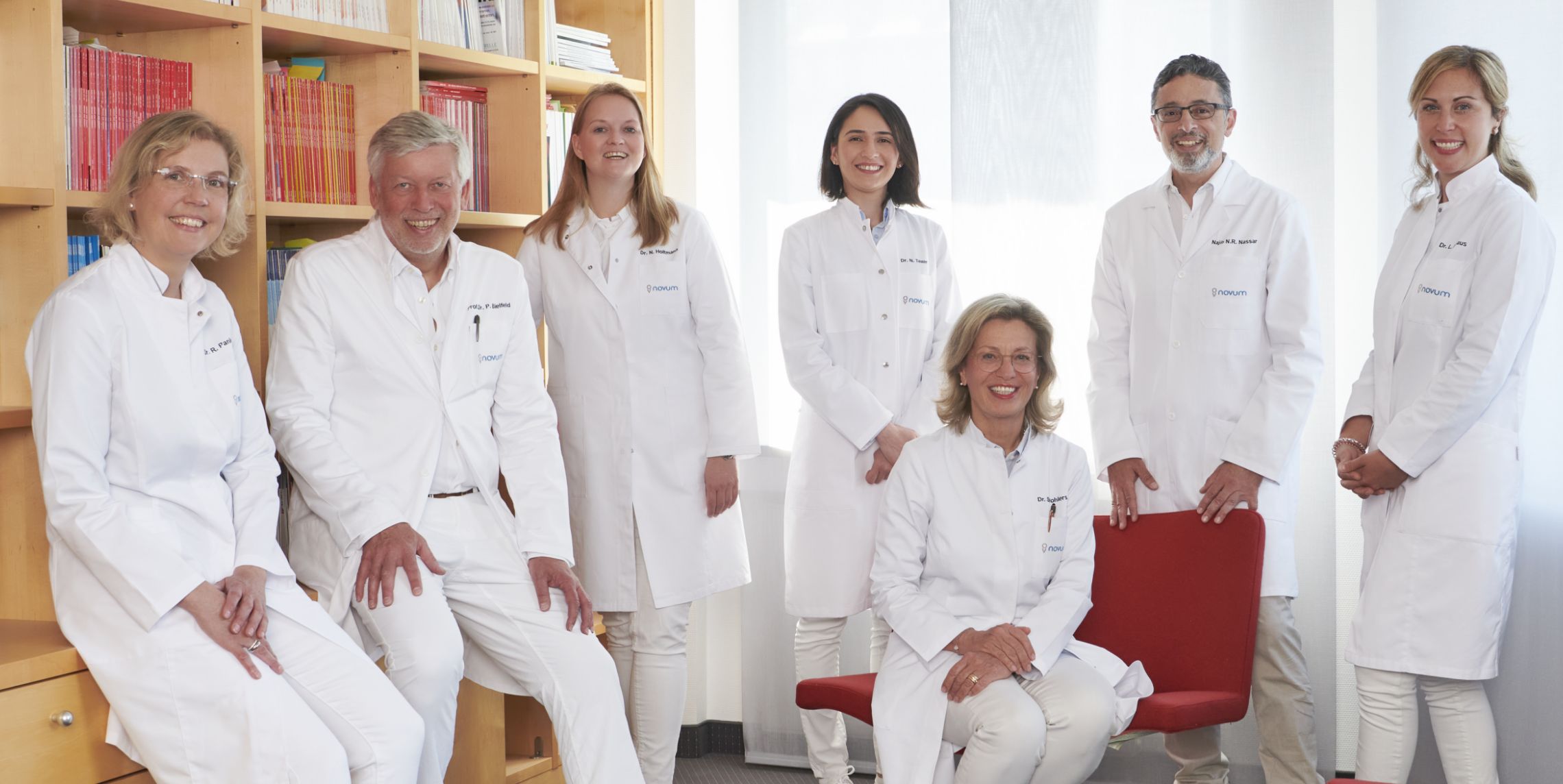
NOVUM Fertility Center in Germany
Specialized Center for Reproductive Medicine
The NOVUM Fertility Center (novum Kinderwunschzentrum) is one of the leading fertility centers in western Germany, with two locations in Essen and Duisburg, North Rhine-Westphalia. The center specializes in the full spectrum of assisted reproductive technologies, from basic hormone therapy to complex IVF programs with preimplantation genetic diagnosis.
Why Choose NOVUM Fertility Center
Official Status and Certification
NOVUM is a state-licensed center for preimplantation genetic diagnosis (PGD) in collaboration with the genetic laboratory SYNLAB MVZ Humane Genetik München. This means it meets the strictest requirements of German reproductive medicine legislation.
The center regularly undergoes quality certification and adheres to European standards for handling biological material, guaranteeing the safety and effectiveness of all procedures.
Experienced Multidisciplinary Team
NOVUM employs a team of specialists with many years of experience:
- Reproductive specialists specializing in gynecological endocrinology
- Embryologists with international training
- Andrologists for the treatment of male infertility
- Geneticists for counseling on hereditary risks
- Medical staff specializing in patient support
The center's physicians regularly participate in international congresses (ESHRE - European Society of Human Reproduction and Embryology) and undergo continuous training to implement the latest techniques in clinical practice.
Modern technical equipment
Embryology Laboratory:
- Time-lapse monitoring systems for continuous monitoring of embryo development
- Laminar flow cabinets and air control systems for optimal culture conditions
- High-resolution microscopes for working with gametes and embryos
- Modern equipment for ICSI, PICSI, and other micromanipulations
Cryolaboratory:
- Fully automated biomaterial storage system with backup power supply
- Modern vitrification (ultra-fast freezing) system
- Continuous temperature monitoring (-190°C)
- Multi-stage safety system with automatic alerts
The modernized cryostorage facility ensures the safe storage of frozen eggs, sperm, and embryos, even in emergency situations (power outages, liquid nitrogen supply interruptions).
Treatment Methods at the NOVUM Reproductive Center
Basic Programs
Cycle Monitoring - Ultrasound ovulation monitoring for conception planning during a natural cycle or with minimal hormonal support.
Hormonal Therapy - Correction of hormonal imbalances affecting fertility (ovulation disorders, luteal phase insufficiency).
Insemination (IUI) - Direct injection of prepared sperm from a partner or donor into the uterine cavity during ovulation. An effective method for mild forms of male factor or cervical factor infertility.
IVF and ICSI Programs
Conventional IVF (IVF) - Egg retrieval after stimulation, in vitro fertilization, and embryo transfer into the uterine cavity.
ICSI - Intracytoplasmic Sperm Injection. An embryologist selects a morphologically normal sperm under a microscope and injects it into the egg. This method is indicated for severe forms of male infertility.
Natural IVF is the process of retrieving an egg through a natural cycle without hormonal stimulation or with minimal support. It is suitable for patients for whom stimulation is contraindicated, or for those who prefer a more natural approach.
Embryo Cultivation to the Blastocyst Stage
Embryos are cultured in the laboratory until day 5-6 of development (blastocyst stage). This allows:
- Selecting embryos with the highest implantation potential
- Reducing the risk of multiple pregnancies (usually a single blastocyst is transferred)
- Increasing the overall effectiveness of the program
Cryopreservation (Freezing)
Embryo Vitrification is the ultra-rapid freezing of good-quality embryos for use in future cycles without re-stimulation.
Egg vitrification is the freezing of unfertilized eggs for delayed pregnancy (social freezing) or before medical procedures (medical freezing).
Sperm vitrification is for patients with progressive diseases affecting sperm quality, or before medical interventions.
Cryocycles are the transfer of thawed embryos in a natural or artificial (hormonally prepared) cycle.
Surgical sperm retrieval
TESE (Testicular Sperm Extraction) is a testicular biopsy to obtain sperm if none are present in the ejaculate (obstructive or non-obstructive azoospermia). The retrieved sperm are used for ICSI fertilization and can be frozen for future attempts.
Fertility Preservation Programs
Social Freezing - egg cryopreservation for women planning to delay motherhood for personal or professional reasons. Recommended age: up to 35 years, when oocyte quality is optimal.
Medical Freezing - fertility preservation before medical procedures that may affect reproductive function:
- Chemotherapy
- Radiation therapy
- Surgeries on the reproductive system
- Treatment of autoimmune diseases
Innovative Technologies and Additional Methods
- Time-Lapse Imaging. Modern incubators with built-in cameras take photographs of each embryo every 10-20 minutes without removing it from a stable environment. The embryologist receives detailed information on development at all stages, helping to select the embryo with the best implantation potential.
- PICSI (Physiological ICSI). Physiological selection of sperm for ICSI based on their ability to bind to hyaluronic acid, a marker of maturity, and normal DNA. This method can improve results in cases of repeated failure of standard ICSI.
- Zymot. A microfluidic device for sperm selection with minimal DNA fragmentation. Sperm pass through microchannels that mimic natural selection, allowing for the selection of a fraction with the best genetic material.
- Laser-Assisted Hatching. Laser incision of the embryonic membrane to facilitate its release and implantation. It can be used in older patients, with thickened membranes, or with repeated implantation failures.
Specialized culture media
- EmbryoGen and BlastGen - media supplemented with growth factors to improve embryo development.
- EmbryoGlue - a transfer medium with a high hyaluronic acid content that promotes embryo adhesion to the endometrium.
- EMBRACE - a comprehensive approach to optimizing embryo culture conditions.
Endometrial diagnostics
ERA/ALICE/EMMA tests - a comprehensive study of the endometrium:
- ERA - determination of the implantation window (optimal time for transfer)
- ALICE - detection of chronic endometritis
- EMMA - assessment of the endometrial microbiome
uNK cell and plasma cell analysis - study of immunological factors influencing implantation.
Endometrial microbiome - assessing the bacterial composition of the uterine cavity to optimize implantation conditions.
Preimplantation genetic diagnosis (PGD)
NOVUM is an officially licensed center for PGD. The procedure allows us to exclude the transmission of hereditary diseases or identify chromosomal abnormalities in embryos before transfer.
Indications for PGD:
- Carriage of genetic mutations (cystic fibrosis, muscular dystrophy, hemophilia, and others)
- Carriage of chromosomal rearrangements (translocations, inversions)
- Recurrent miscarriages
- Recurrent implantation failures
PGD is performed after approval by the ethics committee in accordance with German law (Embryonenschutzgesetz).
CatSper test for the diagnosis of male infertility
An innovative test for the detection of genetic defects in the CatSper protein, which is necessary for sperm to penetrate the egg membrane. Men with the CatSper defect have normal sperm counts, but fertilization fails with natural attempts, insemination, and even standard IVF.
The test allows for early detection of this problem and immediate ICSI, avoiding ineffective attempts with other methods.
Additional diagnostics at NOVUM
Tubal patency testing - to determine the need for IVF or the possibility of other treatments.
Hysteroscopy without anesthesia - examination of the uterine cavity to detect pathologies (polyps, adhesions, developmental anomalies).
Endometrial biopsy - to assess receptivity, detect inflammatory processes, and analyze the microbiome.
Cost of treatment at the NOVUM Reproductive Center
Prices are determined individually depending on the chosen treatment method and the need for additional procedures.
Estimated cost of basic programs:
IVF/ICSI:
- IVF with ICSI: €3,500-€5,000
- Stimulation medications: €1,500-€3,000
- Blastocyst culture: included
- Embryo vitrification: €600-€900
- Biomaterial storage: €300-€400 per year
Additional technologies:
- Time-Lapse monitoring: €400-€600
- PICSI: €300-€500
- Assisted hatching: €300-€450
Diagnostics:
- ERA test: €700-€1,000
- ALICE/EMMA: €400-€600
- CatSper test: €300-€500
- Hysteroscopy: €400-€700
Male factor:
- TESE (testicular biopsy): €2,000-€3,500
- Sperm vitrification: €400-€600
The exact cost is determined after a consultation, taking into account an individual treatment protocol.
Questions and Answers
How long do I need to stay in Germany? It depends on the program: insemination - several visits during the cycle; IVF - 10-14 days; cryocycle - 3-5 days.
Can I combine part of the examination with work at home? Yes, many tests and ultrasounds can be performed at home, with the results sent to you. Physical presence is required for the final stages of treatment.
How long are frozen embryos/eggs stored? Biomaterial can be stored indefinitely, provided it is kept at the correct temperature and the storage fee is paid regularly.
Does insurance cover the costs? International patients are typically responsible for the cost of treatment. Some international insurance policies may cover part of the cost; please check the terms and conditions.
